
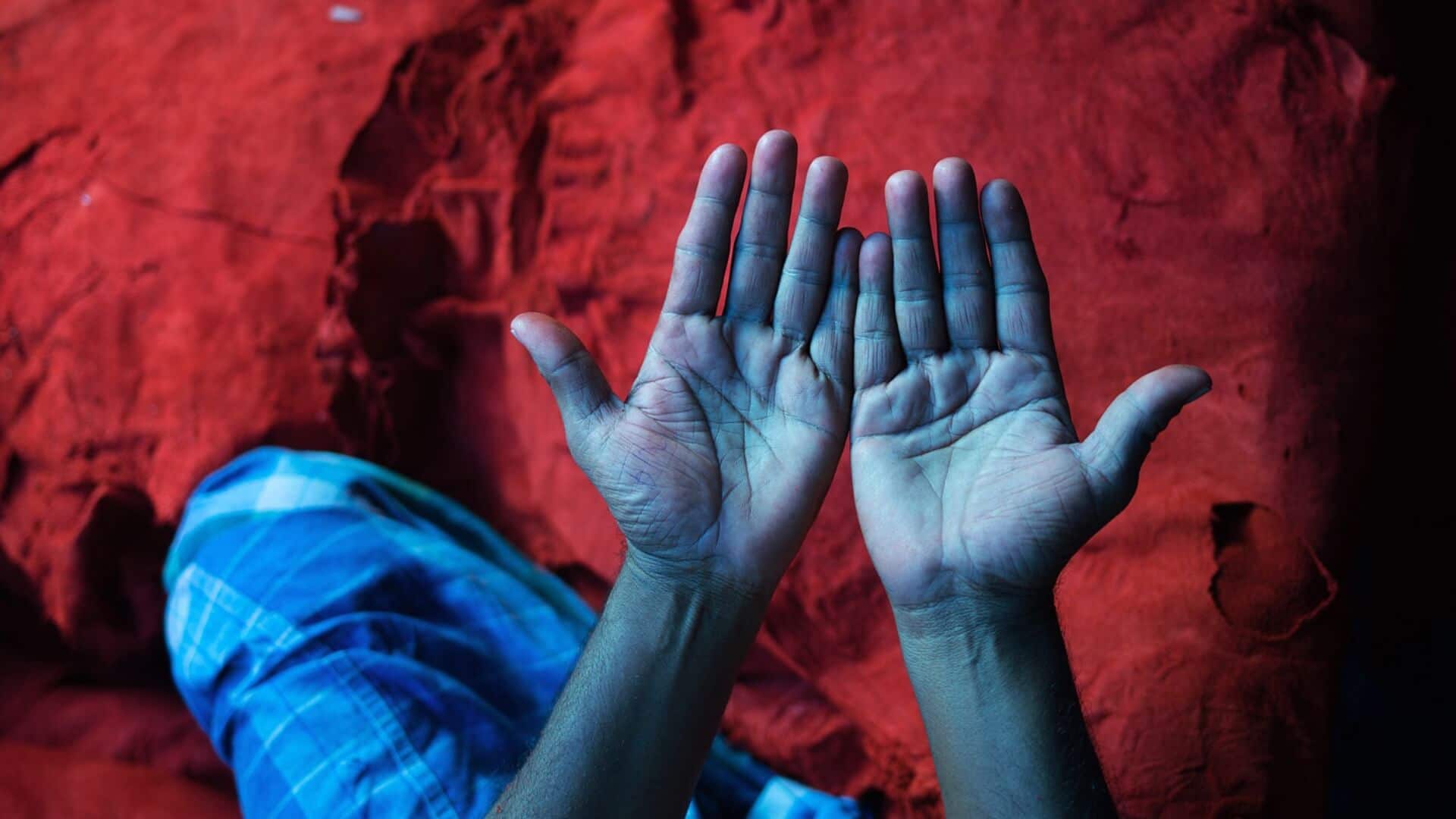

Who sinned…
- Sermon By: The Rev Jeff Lackie
- Categories: challenge, Divine Promise, God, Hope, Kingdom', Love, miracle, mystery, Sunday Worship
A focus on sin is not a new thing. But it is the wrong thing.
This blind man was ‘old enough to speak for himself’ (so his parents declaration “he is of age…ask him.”) So, he has years of lived experience with his condition. Not a pleasant life, but he has adapted. He knows how to get by, and his world is turned upside down (or perhaps right side up) by this chance encounter. He was not lobbying for a cure. He was in his usual place. Begging (or not) – listening to the world go by. The disciples were not (necessarily) interested in healing him. They have noticed him – that’s all – and want to know ‘who sinned?’
The blind – the lame – the disadvantaged are often just curiosities. They stay on the edge of public awareness. They raise questions in us, and perhaps sympathy, but not always action. We’d rather talk about why such problems exist.
Where does evil come from? Why do bad things happen to good people (or any people, come to that…) Those questions make us feel aware – and this question about the blind man probably suited the disciples perfectly well. It might have been a signal of their ‘social awareness’ that they noticed this blind man. They express a kind of curiosity, but that was as far as they were prepared to go.
Jesus always goes further than we are prepared to go.
“It’s for God’s glory…” and I think that statement is in very poor taste. What about the man’s feelings? Did he ask to be a vehicle for this miracle? Is God so callous that human misery is ‘required? Do we suffer for God’s benefit? Those are my questions.
The disciples have only one question. Who sinned? Let’s lay some blame, and correct some behaviour. Let’s talk about the why, Jesus. For once, answer our question instead of raising more questions…
No such luck. Jesus stops and spits and send the man to the pool of ‘sending.’ And then disappears from the story for a while. The idea of the bad behaviour of this man (or his parents) never enters Jesus thought process in this story.
The Pharisees are different. They know their way around the rules – they understand that sin needs to be acknowledged…and then dealt with (read – punished.) And of COURSE this man was healed on the Sabbath.
And now we are near the heart of it. The rule-breakers are ignoring the rules. Humanity is messy, and religion is there to clean up the mess. Someone has to pay – this sin must be ferreted out – behaviour MUST be modified. The system runs on the endless pursuit of purity.
It turns out that the once-blind man doesn’t care. He can see. He calls that a miracle, not a problem. His misery is relieved and he would praise God for that…but first he must satisfy ‘the system.’ Admit your failings and help us stop this fellow from performing these rogue miracles.
Yes, our man can now see, and that means he can see the hypocrisy of the moment. Jesus doesn’t care about the purity games either. He cares about wholeness and healing. He cares about the work of bringing light in the darkness and sight to the blind – actually and metaphorically.
The system is blind – the leaders are blind – their denial of the wretchedness of a system based on measuring human failure renders them the biggest sinners of the story… but that can’t be true. They are in charge. So, as the story grinds on toward its terrible conclusion, they excommunicate the now sighted man…and set their sights on Jesus.
Jesus will be crucified. The authorities – religious and otherwise – will see to it. Not because God is a distant, punishing figure, but because Jesus dared to declare that God was in our midst – part of the fabric of creation – and God’s promised kingdom? Already among us. The focus on sin – so important to those of any age who would ‘keep the faith by keeping the rules’ – is always the wrong approach.
We are drawn to the stories of moral failure. We delight in the kind of religious gossip that drove the disciples to ask their question. But that is a shadowy curiosity – that is life in the dark. Jesus calls us into the light. He reframes centuries of legalistic maneuvering – puts the whole enterprise under the lens of love:
Love God and love your neighbour – this is the summary, for Jesus, of all the law and all the prophets – all that has gone into defining our understanding of how God might work. Jesus does not ignore the question of sin. He redefines and reimagines it. The light of the world banishes the shadows. Rather than a focus on sin as behaviour, Jesus shows us sin as perspective. Bad behaviour is merely a symptom – the result of not seeing clearly the beautiful potential of the relationship between God and Creation.
For his efforts to show, in his teaching and in his living, how we might live into that potential, Jesus was vilified, arrested, and put to death. But the love of God will prevail even in this most extreme case. The cross sought to prove that human sin is to be punished. Jesus’ empty tomb would remind us that God’s love is always waiting to be revealed. It is Easter – every time – that opens our eyes.